Beyond the Block: A Weekend Chasing Real West Country Cheddar
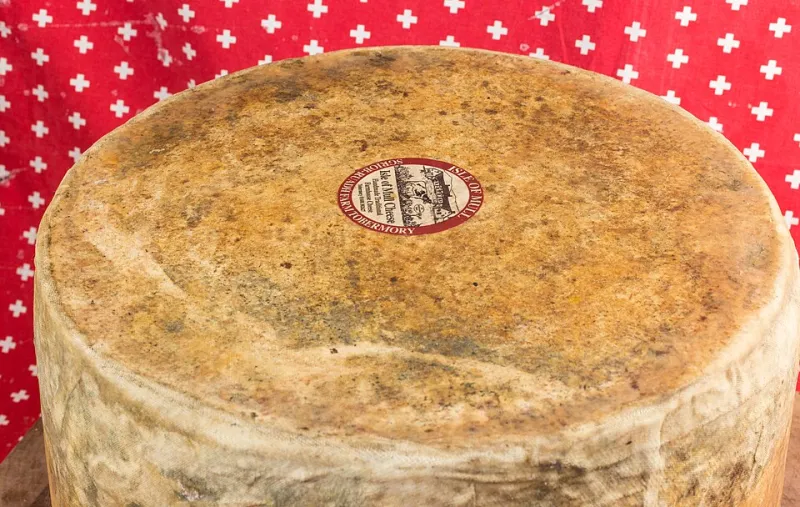
Photo: Hubertl, CC BY-SA 4.0, via Wikimedia Commons
Cheddar is a victim of its own success. The word has stopped meaning a place and started meaning a shape — a block, a colour, a thing you buy without looking at the label. Which is a shame, because about ninety miles west of London there is still a cheese with a date on it, a maker's name, and a flavour that changes depending on which farm gate it came through.
So we did the obvious thing and made a weekend of it. Two days, one tank of fuel, three wedges, and a lot of bread in the footwell.
The route, briefly
This is not a grand tour. It is a loop you can do without a spreadsheet: Saturday morning at a Saturday market in Frome or Bruton, north-west to the farm shops around Wincanton and Castle Cary, then a slow crawl south through Sherborne and on to Bridport for the night. Sunday morning, a cheese counter in Bridport or Sturminster Newton, then home. Roughly 120 miles of driving in total, most of it on lanes with hedges higher than the car.
Our rule for the weekend: buy small, buy cut-to-order, and never buy more than you can eat within a fortnight.
Wedge one: the young one
Young cheddar gets a bad press and mostly deserves better. We picked up a three-month-old from a farm shop counter near Bruton, cut that morning, still faintly damp.
Taste notes: Milky before anything else, then a clean yoghurt sourness at the back of the tongue. The texture is the giveaway — springy, almost squeaky against the teeth, the curd still legible. No crystals, no heat, no length. It tastes like the cheese equivalent of a cold glass of milk and, crucially, it tastes of the morning it was made.
How we'd serve it: Thick slices on bread that has been warmed but not toasted, with salted butter underneath and a sharp apple on the side. It is also the right cheese for a rarebit, because it melts without oiling off. Do not put this one on a board next to a mature cheddar; it will disappear into the shadow.
Wedge two: the mature one
Eighteen to twenty-four months, from a counter in Sherborne, wrapped in paper the assistant folded with more care than we fold anything.
Taste notes: Immediately drier, more savoury, with the little crunchy specks of calcium lactate that people either love or find unnerving. There is a brothy, almost stock-cube quality here, and a tingle at the back of the throat that lingers longer than you expect from a cheese you grew up thinking of as a sandwich filling. The finish is long and slightly bitter, in the way good olive oil is bitter.
How we'd serve it: Barely at all. Room temperature for at least an hour, cut into thin shards, on an oatcake or nothing. A spoon of chutney at the edge of the plate, not on top. It is also the cheese for a proper macaroni, though we'd grate in a little of the young one too, for melt.
Wedge three: the cloth-bound one
This is the one worth the drive. Cloth-bound cheddar is wrapped in cloth and brushed with lard, then left in a cool, damp cellar to do its own thing for a year or more. It looks like something dug up. It costs like something dug up.
Taste notes: Less sharp than the mature, more complicated. Hay, wet stone, a faint farmyard note that sounds off-putting on paper and is the whole point in the mouth. The paste breaks into shards rather than slices. The rind is edible if you're brave and textured if you're not — we cut it off and ate it standing up in the kitchen.
How we'd serve it: A ploughman's, properly done: celery, a few cornichons, good ham, bread and butter. Or with a pear and nothing else. It is too interesting to grate, and we say that as people who grate almost everything.
What to ask at the counter
The counter is where the weekend is won or lost. Assemble a small script before you go in.
- How old is this one, exactly — and when was it cut?
- Is this from the truckle you opened today, or has it been wrapped a while?
- Can I taste before I buy? (Nearly always yes. Ask.)
- Is this cloth-bound or block-made, and where was it matured?
- What would you take home for a Sunday evening?
The last question is the best one. Cheese counter staff are not shy with opinions and are usually right.
The money
Being honest: this is not a cheaper way to buy cheese. Our three wedges, roughly 250–300g each, came to about £38 between them, with the cloth-bound doing most of the damage at around £4.50 per 100g. Fuel for the loop was £30-odd, lunch for two on the Saturday was £28, coffee and a pastry somewhere in the middle was another £12. Add a night away and you are well past £150 for two.
On pure cost per gram, stay home and buy a supermarket block. On everything else — the market stalls, the lanes, the person who cut your cheese and told you what their dad thinks of it — the drive earns its keep. Treat it as a day out that happens to end with cheese, not as a shopping trip, and it makes sense.
The verdict
Go for the cloth-bound, stay for the mature, and buy the young one on the way past because it will make your toast better on Monday. Three wedges, one weekend, and a car that smells faintly of dairy until Wednesday.