Bramleys, All the Way: Four November Puddings and a Few Honest Notes on One Bag
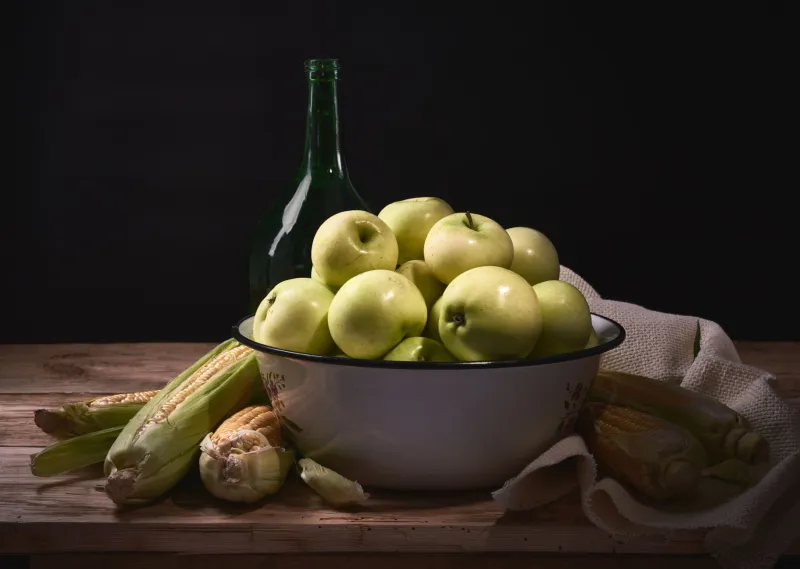
There is a particular sort of November satisfaction in bringing home a big paper bag of Bramleys. They are not pretty in the way a Cox or a Russet is pretty. They are lumpy, often a furious green, and they smell like the idea of an apple rather than the thing itself — sharp, green, a bit bracing. But they cook like nothing else we grow here, and a single bag can carry you through a fortnight of puddings if you know what you are doing.
This is not a recipe collection in the usual sense. It is a plan for a bag: how to choose it, how to test it, and four puddings that each ask something different of the fruit. None of them are difficult. All of them depend on the Bramley doing its job, which is to collapse into something softer and more interesting than it started.
First, the Feel of the Thing
A good Bramley should feel heavier than it looks. Pick it up and it should have a certain density, a promise of juice inside. The skin should be firm and tight, with no give when you press near the stem. A little softness at the blossom end is fine; a bruise that yields under a thumb is not. Smell it at the stem — you want green apple, clean and tart, not fridge or wax.
Size matters less than condition. The big, glossy ones in the supermarket bags can be watery; the smaller, knobbly ones often have more acidity. If you are buying loose, choose fruit that feels cold and firm, and avoid any bag where you can see a soft one pressed against the paper. One bad apple really will hurry the rest along.
The Collapse Test (and What It Tells You)
Before you commit a whole bag to a pudding, test one apple. Cut a thick slice, put it in a small pan with a teaspoon of sugar and a splash of water, and cook it gently for five minutes. A good Bramley will start to break down at the edges and turn into a rough, fluffy purée with some shape still in the middle. A poor one will stay watery and firm, or turn to a bland mush with no acidity.
I did this with three supermarket bags this week. The value bag from one of the big chains was decent — sharp, collapsed well, but one apple was already soft and had to be cut away. A mid-range bag was firmer and more consistent, with a cleaner flavour. An organic bag had smaller fruit and a noticeably sharper edge, which I liked for the crumble but not for the baked apples. None were bad. All needed a look-through before cooking.
Four Puddings, One Bag
1. A Crumble That Stays Sharp
This is the pudding that justifies the whole bag. Peel and slice about a kilo of Bramleys, toss with 80g of sugar and a squeeze of lemon, and put them in a buttered dish. If you want a little sweetness without losing the point, add a chopped pear or a handful of frozen blackberries. The topping is 150g plain flour, 100g cold butter, 50g porridge oats and 50g chopped hazelnuts, rubbed together until it looks like rough breadcrumbs, then scattered over the fruit. Bake at 180C fan for 35–40 minutes, until the juices bubble at the edges. Eat it warm with cold cream. The apples should be soft but still tasting of apple, not sugar.
2. Baked Apples with Mincemeat
Core four good Bramleys and sit them in a shallow dish. Fill each cavity with a heaped teaspoon of mincemeat and a small knob of butter; a little marzipan pushed in first is a good move if you have it. Pour a splash of water around the base and bake at 180C fan for 35–45 minutes, until the skins are wrinkled and the flesh gives when pressed. The sharpness of the apple cuts through the mincemeat beautifully. Serve with custard, and don't bother peeling them — the skin holds everything together.
3. Bramley and Ginger Pudding
This is a good one for a Sunday. Stew 500g of peeled, sliced Bramleys with 50g of sugar and a tablespoon of water until just soft, then spread them in the base of a buttered dish. Cream 100g soft butter with 100g light brown sugar, beat in two eggs, then fold in 150g self-raising flour, a teaspoon of ground ginger and two chopped balls of stem ginger. Spoon over the fruit and bake at 180C fan for 40–45 minutes, until springy. The Bramleys go soft and jammy underneath; the sponge stays light. Serve with more stem ginger syrup if you like.
4. Bramley Tarte Tatin
A Bramley tatin is a bit of a dare, because the apples want to collapse. But if you keep the wedges thick and resist stirring, you get something soft, caramel-heavy and more spoonable than sliceable. Melt 80g butter and 80g sugar in an ovenproof frying pan until it turns a light caramel, then pack in wedges of peeled Bramley, rounded side down, fitting them tightly. Cook on the hob for five minutes, then cover with a circle of rough puff pastry and bake at 200C fan for 25–30 minutes. Rest for five minutes, then invert onto a plate. It will not be neat. It will be very good.
The Last of the Bag
Bramleys keep well in a cool, dark place, but once they start to soften they need using. The last two or three can become applesauce: peel, chop, cook with a splash of water and a little sugar until collapsed, then beat in a knob of butter and a teaspoon of cider vinegar. Freeze in small tubs. It is the sort of thing that makes a bowl of porridge feel like a proper November breakfast, and it means the bag gives you one last thing before it goes.