The Onion That Pulls You Back to the Board: A November Pickle Test
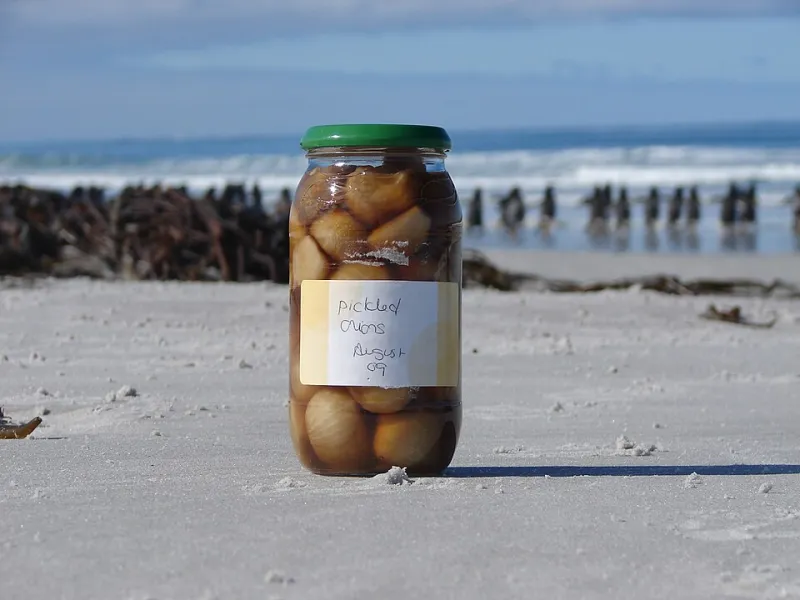
Photo: Stevesouthern, CC BY-SA 3.0, via Wikimedia Commons
The board needs a troublemaker
A good cheese board is not a polite arrangement. It needs something to argue with the Brie, something to interrupt the butteriness of a wedge of Stilton, something that makes you put down your cracker and reach for the knife again. In our house, that job usually falls to a pickled onion. Not the biggest thing on the plate. Not the most elegant. But the one that keeps the whole board moving.
Mid-November is the right time to think about this. Christmas is close enough to plan for and far enough away to test properly. So I put three jars on the counter — a supermarket stalwart, a quick fridge pickle made on a Sunday afternoon, and a proper spiced jar that had been sitting in the cupboard for a fortnight — and ate them with the same three cheeses. It was not a laboratory. It was lunch, repeated three times, with notes.
What I was judging
Crunch matters most at the start. A pickled onion that gives way too easily is a sad thing beside a hard cheese. It needs a clean snap, or at least enough resistance to remind you it was once an onion. Acidity comes next: sharp enough to cut through fat, but not so aggressive that it tastes of nothing but vinegar. Sweetness should be a background hum, not a syrup. And there is the aftertaste — the bit that decides whether you go back for another onion or another slice of cheese.
That last point became the real test. The best pickled onion is not necessarily the strongest one on its own. It is the one that makes the next bite of cheese taste better. If it ends the conversation, it has failed. If it makes you want to keep talking, it has done its job.
Jar one: the supermarket stalwart
The first jar was the kind you find in any UK supermarket: small silverskin onions in malt vinegar, the brine slightly amber, the lid familiar. These are the pickled onions of pub ploughman's lunches and Boxing Day leftovers. They are reliable, cheap and easy to keep in the cupboard.
On the plate, they were softer than I wanted. Not mushy, but without much snap. The vinegar was blunt and forward, with a sweet edge that lingered. Beside a mature Cheddar they did the job, but they also made the Cheddar taste saltier and a little tired. With Brie, they were better — the acidity cut the cream — but the sweetness started to cloy after two.
Still, I would buy them again. Not as the star, but as the backup. They are the jar you open when someone arrives unannounced, or when the proper jar is still maturing and you need something sharp on the board. There is no shame in that. A good kitchen has room for the dependable option.
What to look for if you are buying: firm onions, a brine that smells clean rather than sugary, and a best-before date that gives you room. If the onions look wrinkled through the glass, leave them on the shelf.
Jar two: the quick fridge pickle
The second jar was made at home on a Sunday, using red onions sliced into thin rounds, cider vinegar, a little sugar, salt and a few black peppercorns. It was ready in 24 hours and kept in the fridge. This is the pickle I make when I want sharpness now, not in three weeks.
The crunch was the best of the three. Red onion keeps a firm bite, and the cider vinegar gave a brighter, fruitier acidity than the malt vinegar in the supermarket jar. It was lively beside the Cheddar, almost too lively beside the Stilton, and very good with a slice of cold roast beef that happened to be in the fridge. The downside was depth. It tasted fresh and clean, but it did not have the rounded, savoury backnote of a proper spiced pickle.
This is the jar to make now. It will be at its best between now and early December. If you make it for Christmas, make it in the week before and keep it cold. It does not need months. It needs a day and a tight lid. The formula is simple: one red onion, enough cider vinegar to cover, a teaspoon of sugar, a good pinch of salt, and whatever peppercorns or bay leaf you have. Heat the vinegar just enough to dissolve the sugar, pour it over the onions, and wait. That is it.
Jar three: the proper spiced jar
The third jar was the one I had made with white onions, distilled vinegar, mixed peppercorns, a bay leaf and a small dried chilli. It had been in the cupboard for two weeks. The onions were still firm, the brine smelled warm and spiced rather than harsh, and the first bite had a roundness the other two lacked.
This was the best all-rounder with the cheese. The acidity was steady rather than shouty, and the spices gave it a savoury edge that made the Cheddar taste sweeter and the Stilton taste less aggressive. It was also the only one I wanted to eat on its own, straight from the jar, which is a dangerous quality in a pickle.
This is the jar to leave until December. Not because it is bad now, but because it will be better in a fortnight. The spices need time to settle, and the vinegar needs to soften. If you make it this weekend, it will be ready for the first proper cheese board of the season. Keep it in a cool cupboard, then move it to the fridge once opened.
The verdict
I would not choose one jar and ban the others. The supermarket stalwart is the one to buy for the cupboard. The quick fridge pickle is the one to make now for immediate crunch. The proper spiced jar is the one to make this month and leave until December, when the cheese board gets serious.
But the real lesson was about balance. A pickled onion should not be a challenge. It should be an invitation. The best one made me cut another slice of Cheddar, then another, then finish with a piece of Stilton because the onion had cleared the way. That is what a sharp little hero does. It does not take over the board. It keeps the board alive.