Three Pans of Onions, One Better Soup: The Case for Slower Browning
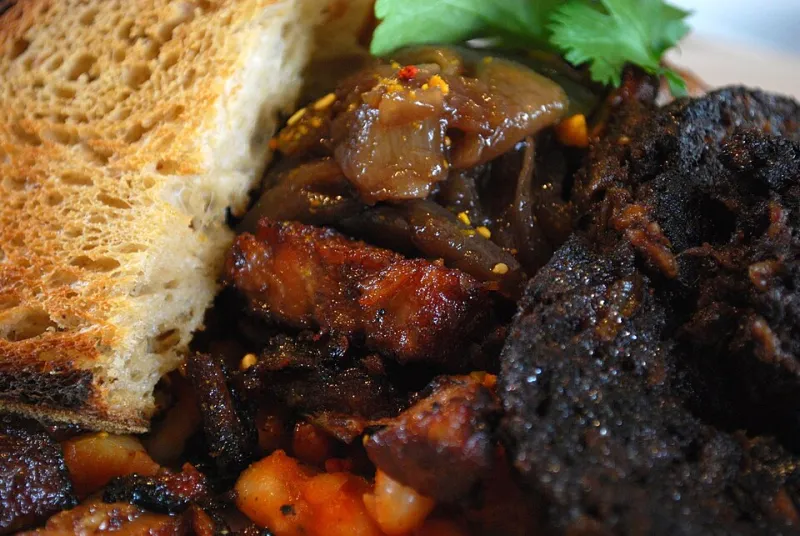
Photo: avlxyz, CC BY-SA 2.0, via Wikimedia Commons
At Taste Harris, the winter soup routine used to begin with a vague instruction: soften the onions. That word has a lot to answer for. It suggests five minutes, a bit of stirring and a pan that looks busy enough to be doing something useful. But busy is not the same as brown, and brown is not the same as deep. This month I set three pans going with the same brown onions, the same rapeseed oil and the same pinch of salt, then built the same simple root soup from each batch. The difference was not subtle.
The test: same onions, three heats
I used 500g of onions per batch, sliced to roughly the same thickness, in the same wide frying pan, one after the other. No sugar, no bicarbonate of soda, no stock trickery at the onion stage. Just heat, salt and time.
The first batch went into a properly fierce pan. The onions hissed, caught at the edges and were glossy within eight minutes. The second batch got a moderate heat and about twenty minutes, which is probably what most of us mean when we say we cooked the onions down. The third batch had a low flame, a little patience and forty minutes, with a splash of water only when the pan looked like it might sulk.
Then each batch went into its own pot with carrots, a floury potato, thyme and vegetable stock. Same soup, different foundations.
What fierce heat actually gives you
The hot pan was the most exciting to watch and the least useful in the bowl. The onions browned in patches, some strands dark and crisp, others still squeaky. It smelled promising, in that sharp, fried-onion way, but the soup tasted thin. There was sweetness at the edges, yet it sat on top of the broth rather than melting into it. The darker bits gave a roasted note, but a couple of spoonfuls had a faint bitterness that no amount of seasoning fixed.
This is the trap of rushing browning. High heat gives you colour quickly, but it does not give you the soft, jammy collapse that onions need before they become a soup base. You end up with fried onions in stock, which is not the same thing at all.
The moderate pan: respectable, but a bit tight
The twenty-minute batch was fine. Genuinely fine. It turned a decent golden colour, smelled sweet and savoury, and made a bowl of soup that I would happily serve on a wet Tuesday. But it still had a little bite in the centre of the slices, and the sweetness was flat rather than rounded. The soup was good; it just was not generous. It needed something extra, and I could not work out what, which is usually a sign that the onions were pulled too early.
Most home cooks stop here because the pan looks done. The onions are soft enough to stir, the kitchen smells right, and there is a pot of stock waiting. But the difference between soft and sweet is often another ten or fifteen minutes.
The slow pan: quieter, darker, better
The forty-minute onions were almost boring to cook. Low heat, occasional stir, a pinch of salt early on and a watchful eye. They did not sizzle dramatically. They sighed, softened, then slowly turned the colour of weak tea, then strong tea, then a deep amber jam. There was no bitter edge and no raw onion prickle. The sweetness was broad and savoury rather than sugary.
In the soup, that batch did something the others did not. It gave the broth a rounded base that made the carrots taste more carrot-like and the thyme more fragrant. Nothing else had changed. The onions had simply been allowed to finish.
The practical rules I am keeping
Use a wide pan, because crowded onions steam and steam does not brown. Salt early, but lightly, to draw out moisture. Stir less than you think; constant stirring keeps the heat moving and stops the edges from catching in a good way. If the pan looks dry before the onions are ready, add a splash of water rather than more oil. And keep the heat low enough that you are not fighting the pan.
Forty minutes is not a law. For a light broth, twenty-five may be plenty. For a winter soup with roots, lentils or beef, the longer cook is worth it. The point is not to chase dark colour for its own sake. The point is to let the onion move from sharp and squeaky to soft and sweet before the liquid goes in.
It costs no extra ingredients, only attention. In a season of big-flavoured braises and heavy Sunday pots, that is the quiet upgrade most soups are missing.