The Jar at the Back of the Shelf: A Defence of Pickled Walnuts
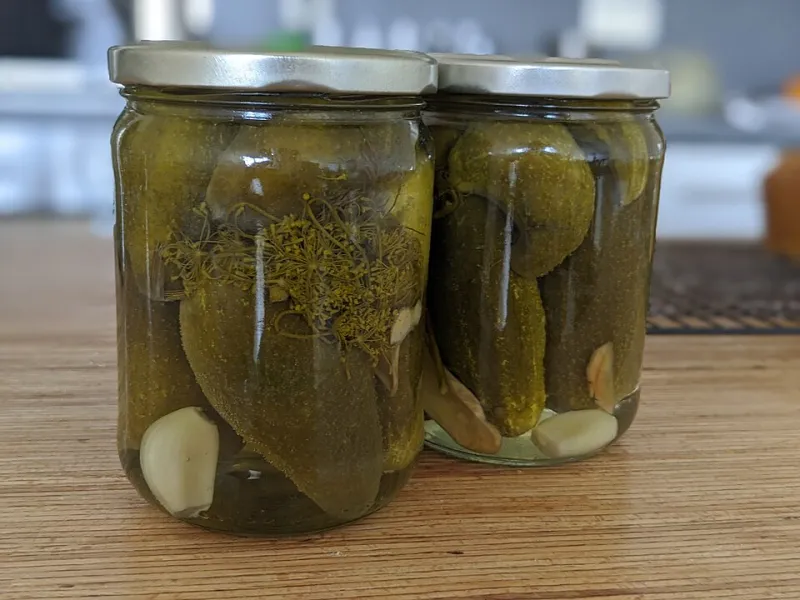
Photo: Shisma, CC BY 4.0, via Wikimedia Commons
Every Christmas table has one. A jar at the back of the shelf, dark and unappealing, bought by a well-meaning relative in 2019 and never opened. Pickled walnuts are the condiment everyone owns and nobody serves. I think that is a mistake, and I have spent the last few weeks eating them with everything in reach to work out whether my defence holds up.
What they actually are
Whole green walnuts, picked in early summer before the shell hardens, steeped in brine until they turn black, then preserved in spiced vinegar — sometimes with a splash of port or stout in the better jars. You buy them whole, ready to slice, and they keep for years if you leave them alone. They are not a new idea: they were a fixture of the Victorian cold table long before anyone thought to put cranberry sauce in a sandwich, and they have survived on British shelves largely through habit rather than enthusiasm.
Which is a shame, because the flavour is genuinely unusual. Sharp, obviously — the vinegar is not shy — but underneath it there is a deep, almost beefy savouriness and a background of clove and black pepper. The texture is the odd bit: firm and slightly tannic, somewhere between a good olive and a slice of cooked beetroot, with a faint chalkiness at the core that divides people immediately.
Where to find a decent jar in the UK
They are not difficult to buy, they are just not somewhere you look. Independent delis usually have them near the chutneys. Farm shops and garden centres with a decent food hall are reliable. Larger supermarkets stock them seasonally from about October, usually on the bottom shelf near the pickled onions, and online specialists sell them year round.
Expect to pay somewhere between four and eight pounds a jar. The size varies wildly and so does the quality: cheap jars tend to be thin-fleshed, over-vinegared and slightly mushy, while better ones are plump, firm and spice-forward. Look for jars that name the vinegar and mention port, stout or malt, and check the walnuts are whole rather than broken. If you can only find halves, they are fine for cooking but will go soft faster once opened.
With cold meats
This is where they earn their place. Cold ham, salt beef, tongue, a sliced pork pie — anything fatty and slightly salty benefits from that vinegar hit. Slice a walnut thinly and lay it over a piece of ham, and the whole thing sharpens up. Two or three slices per person is plenty; the flavour is strong enough that a heap of them would be aggressive.
A thin slice tucked inside a cold pork sandwich with a bit of mustard is, genuinely, one of the better small lunches of the season.
With cheese
Stilton and pickled walnut is the classic and it still works: the sweetness of the spice against the salt of the blue, the vinegar cutting through the fat. Cheddar is arguably better, because a good sharp cheddar has the acidity to meet it halfway rather than being overwhelmed.
What does not work is soft cheese. Brie and pickled walnut fought each other — the walnut won, and the brie just tasted of vinegar afterwards. Keep them for the hard stuff.
The leftover roast beef problem
Here is the real test, and the reason I keep buying the jar. Cold roast beef on Boxing Day is often disappointing — it dries out, it loses its savour, and no amount of horseradish quite rescues it. A couple of sliced pickled walnuts alongside, or chopped through a spoonful of crème fraîche and horseradish as a rough sauce, and it comes back to life. The tannin in the walnut does something to the iron taste of the beef that is hard to explain and easy to notice.
Chop them finely into a vinaigrette for a winter salad of bitter leaves and cold beef and you have something better than the original roast.
The honest verdict
They divide a table, and they will always divide a table. Some people taste vinegar and tannin and want no further part in it. Fair enough.
But the case for keeping a jar is strong: they cost very little, they last for months once opened, they rescue cold meat, they flatter hard cheese, and they bring a sharpness to a December plate that is otherwise all butter and sugar. Buy a decent jar, serve two or three slices on the edge of the plate rather than in a bowl in the middle, and see who goes back for more.
If nobody does, you have lost four pounds and gained a very good sandwich in January.