The Prick, the Peel and the Packet: What Fresh Chestnuts Actually Cost You
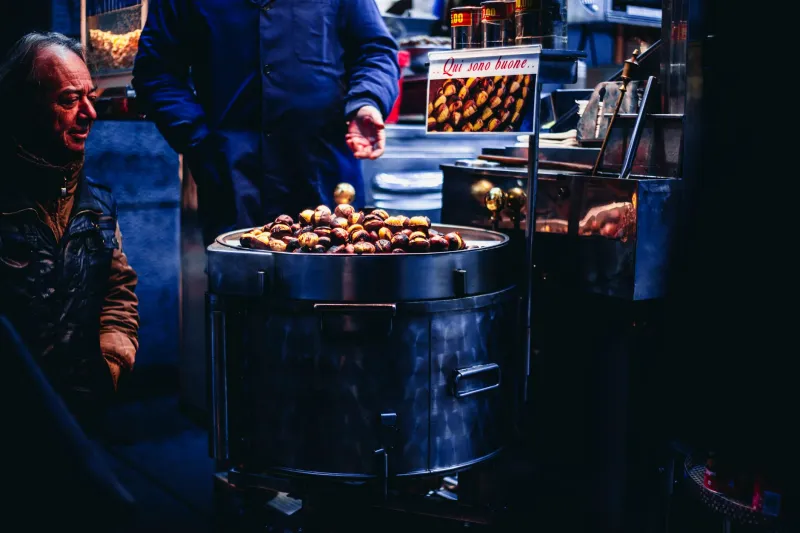
Fresh chestnuts arrive with a lovely promise and a small tax. The promise is sweetness, smoke and the paper bag warm against your palm. The tax is the scoring, the peeling, the bit where a shell shard goes under a fingernail. The vacuum pack promises none of that, which is either a blessing or a clue.
This is not a scorecard with little tasting glasses and a clipboard. It is a fair hearing for two very different winter ingredients, because they do not behave the same way in the kitchen and they are not honestly interchangeable.
The paper bag: choose well, then commit
A good chestnut should feel dense for its size. Pick one up, turn it over, and look for a plump, glossy shell without a rattle when you shake it. A rattling chestnut has usually dried out inside. Avoid anything with mould at the tip or a hole that suggests a tenant has moved in before you.
At a UK market in November, the piles can look uniform until you start sorting. Take the time. A bag of small, tight chestnuts is often better than a bag of large, hollow-feeling ones. Once home, use them within a few days. They are not bulbs and they do not improve with keeping.
Scoring is non-negotiable. A single slit is not enough for me now; I cut a shallow cross on the rounded side, through the shell only. Heat the oven to 200C fan, 220C conventional or gas 7. Spread the chestnuts on a tray, cut side up, and roast for 20 to 25 minutes, until the crosses open and the shells curl back. Then comes the real work: peel them while they are hot enough to make you mutter. A tea towel helps. So does not doing too many at once.
Some will peel cleanly, revealing a pale, floury nut with a faint sweetness and a whiff of smoke. Others will cling to the inner skin like they have been paid to. Expect casualties. Expect to eat a few over the sink. That is part of the cost, and it is also part of the pleasure if you are in the right mood.
The vacuum pack: less romance, more reliability
Vacuum-packed chestnuts are already cooked, peeled and ready. They are not the same creature as a fresh roasted chestnut. Straight from the packet, they can taste watery and a little flat, with a softness that sits somewhere between a nut and a boiled potato. Warm them through with butter and a pinch of salt and they improve considerably, but the smoke and the crumbly snap are not really there.
What they do have is consistency. Every chestnut in the pack is usable. There is no scoring, no burn risk, no pile of shells and no last-minute panic. If your plan is a chestnut soup, a stuffing, a puree or a sauce, the packet is not cheating. It is using the right tool.
Where they fall down is the plate where chestnuts are meant to be the point. A warm chestnut eaten from a paper bag needs the fresh version. A chestnut in a salad needs the fresh version, or at least a very good vacuum-packed one warmed in a hot pan until the edges catch. The packet is a support act. It is a very good support act, but it is not the headline.
The honest effort-versus-reward ledger
Fresh chestnuts win when the ritual is the reward: a cold afternoon, a hot oven, a paper bag, a glass of something. They also win on texture. A freshly roasted chestnut has a dry, crumbly sweetness that holds up against bitter greens and sharp cheese. It tastes of winter in a way the packet does not quite manage.
The packet wins when chestnuts are an ingredient rather than an event. It wins on a Tuesday. It wins when you are making soup for four and do not want to spend twenty minutes peeling for a garnish. It wins when you want a reliable puree without the risk of a bitter skin sneaking through.
Cost is part of the argument, but not the whole argument. Fresh chestnuts are often better value by weight, until you factor in the shells and the ones that refuse to peel. The packet costs more per usable chestnut, but you are paying for time and certainty. That is not a scandal. It is a trade.
A warm salad note
This is less a recipe than a direction, and it is the kind of thing I make when I want chestnuts without turning the kitchen into a shelling station. For two as a side, quarter a couple of handfuls of cooked chestnuts, fresh or vacuum-packed. Warm a generous slick of olive oil in a wide pan with a sprig of rosemary and two or three slices of streaky bacon, if you eat it. Let the bacon render, then add the chestnuts and let them colour at the edges.
Shred a head of cavolo nero or savoy cabbage, add it to the pan with a splash of water, and clamp on a lid for a minute or two. Slice a ripe pear and fold it through at the end with a teaspoon of cider vinegar. Season, add a little grated mature cheddar or parmesan, and eat it warm.
Taste notes: the chestnuts go sweet and crumbly against the bitter greens; the pear brings a soft, juicy contrast; the vinegar cuts through the bacon fat. It is a plate that tastes of late autumn, and it works just as well with the packet chestnuts as long as you let them catch in the pan.
What I will do next time
I will buy a small bag of fresh chestnuts for eating warm, because that is the whole point of them. I will keep a vacuum pack in the cupboard for soup, stuffing and the kind of weeknight cooking where nobody has time for a cross and a tea towel. The ritual is worth it when the chestnuts are the main event. The shortcut wins when they are there to make everything else taste better. That is not a compromise. It is just knowing what you are asking them to do.